The short answer
Our base-case prediction is that US retail RAM prices will remain elevated through the end of 2026 and face continued upward pressure in 2027. The increase is unlikely to be smooth: discounts, older inventory, weak consumer-PC demand, and retailer competition can produce temporary dips even while manufacturers' contract prices continue rising.That distinction matters. Industry forecasts usually track DRAM chips or large contract purchases, not the exact shelf price of a 32 GB memory kit. Retail prices normally follow the underlying market with a delay, and the size of the move depends on capacity, speed, brand, promotions, and whether the product is DDR4, DDR5, or laptop SO-DIMM memory.
Practical takeaway: if you already know you need more memory within the next six months, waiting for a broad return to earlier low prices carries more risk than buying a well-priced compatible kit. If the upgrade is optional, set a target price and watch promotions rather than rushing into a spike.
What the latest market data says
TrendForce reported that conventional DRAM contract prices were expected to rise 13% to 18% quarter over quarter in the third quarter of 2026. It also said PC-memory supply was being reduced as manufacturers shifted capacity toward server applications. By late September, its fourth-quarter outlook still described DRAM as undersupplied, with cloud-service-provider demand and long-term supply agreements limiting the volume available for open negotiation.The longer-term picture remains tight. TrendForce estimated a DRAM sufficiency ratio of roughly negative 1% to negative 2% for 2026 and expected demand growth to outpace supply growth again in 2027. Micron's fiscal third-quarter filing provides another signal: its DRAM average selling prices for the first nine months of fiscal 2026 were about 140% higher than the same period a year earlier. Samsung likewise said it expected supply constraints to continue in the second half of 2026 as server DRAM and high-bandwidth memory demand accelerated.
These figures do not mean a retail RAM kit will rise by the same percentages. They do show that the cost base behind consumer memory is under unusually strong pressure.
Our RAM price scenarios through 2027
Base case: high and uneven
Contract prices keep rising while retail prices advance in waves. Promotions remain available, but the average cost of mainstream DDR5 and laptop memory stays above early-2026 levels.
Relief case: late-2027 easing
Weaker PC demand, faster fab ramps, and better manufacturing yields gradually balance supply. Retail prices flatten first, then selective capacities become cheaper.
Tighter case: another sharp leg up
AI-server orders exceed plans, new capacity arrives late, or trade and supply-chain disruptions reduce available modules. Consumer RAM prices rise faster and discounts become less frequent.
Why AI demand affects the RAM in your PC
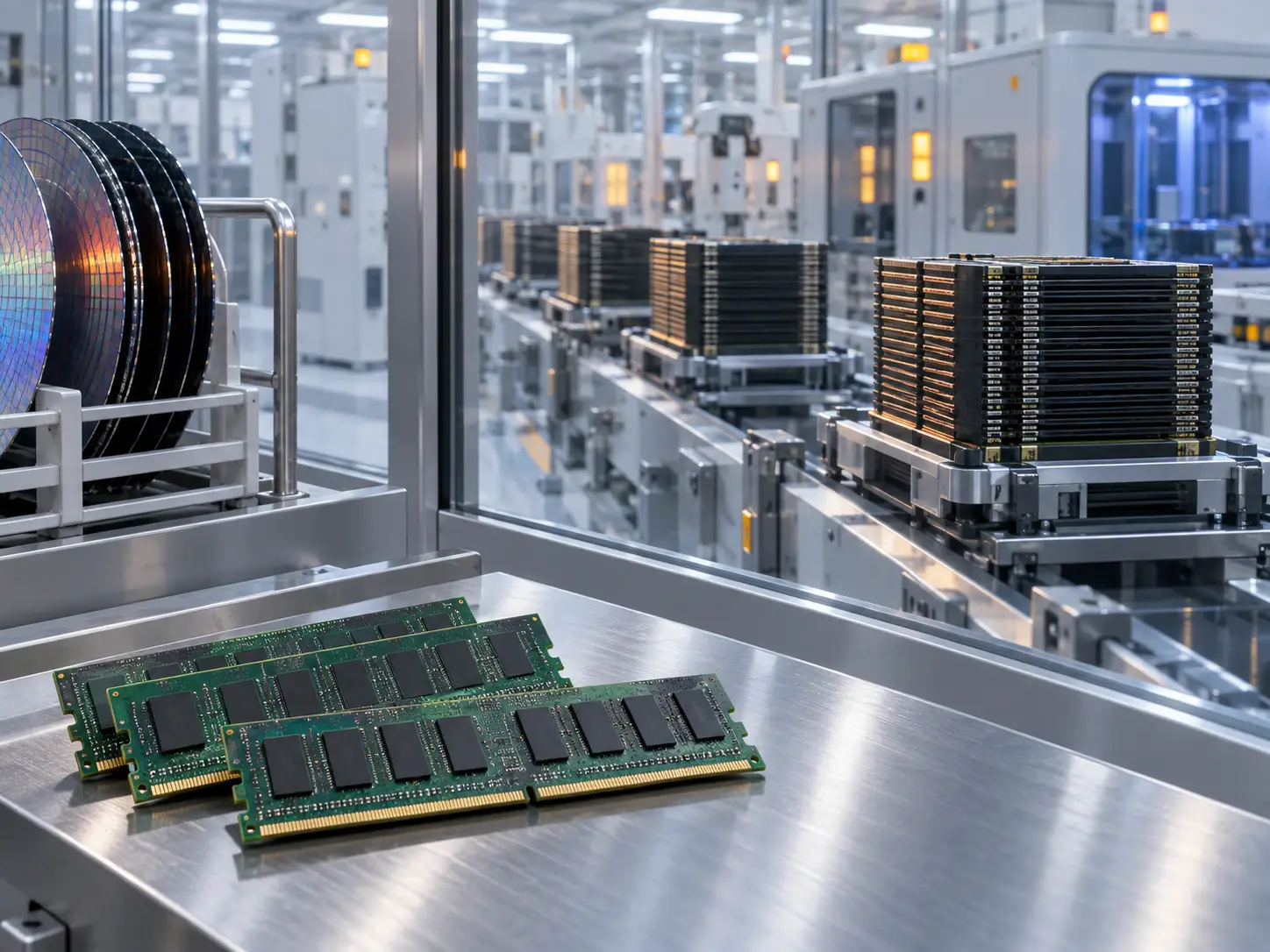
High-bandwidth memory and server DRAM are not interchangeable with a desktop DIMM at the product level, but they compete for supplier investment, advanced process capacity, equipment, and engineering attention. When the largest buyers secure long-term allocations for AI infrastructure, manufacturers have a strong incentive to prioritize higher-value server products.
That leaves less flexibility for PC DRAM, especially while new fabs and process migrations take time to ramp. The result can be tight consumer supply even when notebook and desktop sales are soft.
That leaves less flexibility for PC DRAM, especially while new fabs and process migrations take time to ramp. The result can be tight consumer supply even when notebook and desktop sales are soft.
What this means for DDR5, DDR4, and laptop memory
DDR5
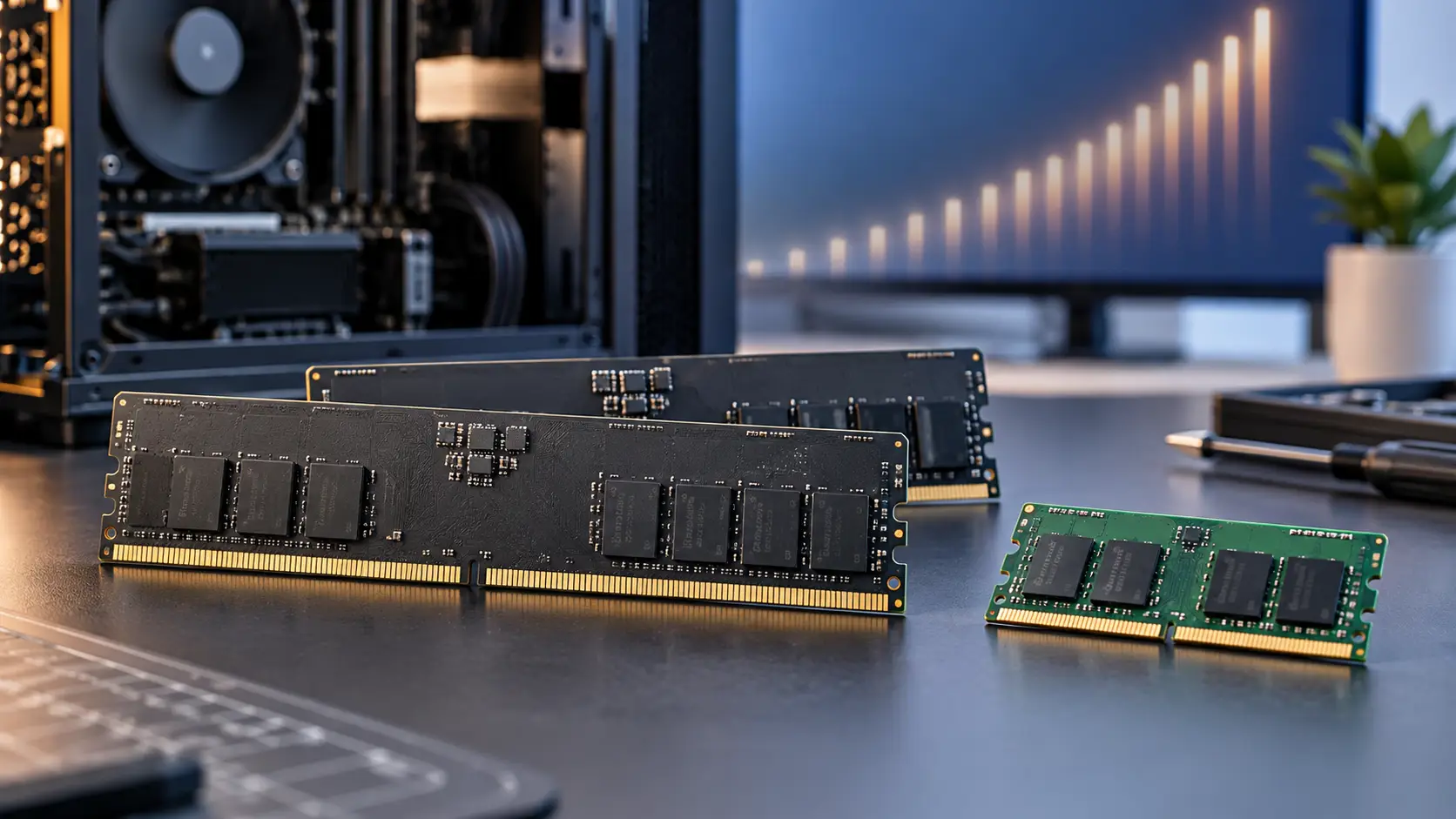
DDR5 is the mainstream choice for new PCs and has the healthiest long-term supply roadmap. It is still exposed to the broader DRAM shortage, so popular 32 GB and 64 GB kits can become more expensive. Competition and increasing output should keep individual deals available, but buyers should not assume every speed grade will move together.DDR4 can behave differently because it is a mature technology with declining production. Weak demand can create bargains when distributors clear inventory, yet reduced output can also make specific capacities or server-grade modules unexpectedly expensive. Buying extra DDR4 only as an investment is risky; buy it when you have a confirmed compatible use.
Upgradeable laptops use a smaller retail market, and many newer systems solder some or all memory to the motherboard. Confirm that the laptop has accessible slots, the supported generation and speed, and its maximum capacity before ordering. For a new laptop, paying for adequate memory at purchase may be safer than assuming an upgrade will be possible later.
A sensible buying strategy
Buy for a real workload
Move from 16 GB to 32 GB when your applications are actually paging, multitasking is constrained, or your next workload has a known requirement.
Check compatibility first
Match DDR generation, form factor, motherboard support, laptop slot access, and practical speed. A cheap incompatible kit has no value.
Use a target price
Compare the same capacity and specifications across several retailers, then buy when a reputable kit reaches your planned budget.
RAM price forecast FAQ
Choose enough memory for your next laptop
Compare current laptop specifications and prioritize a configuration that can handle your workload without depending on a future upgrade.
Sources
- 4Q26 Memory Price Forecast — TrendForce
- AI Server Demand Continues to Support Memory Prices in 3Q26, but Gains Moderate as Consumer Demand Weakens and High Base Effects Take Hold — TrendForce
- Diverging Memory Market Outlook in 2027 as DRAM Supply Remains Tight While NAND Flash Supply Conditions Ease — TrendForce
- Micron Technology Form 10-Q for the quarter ended May 28, 2026 — Micron Technology
- Samsung Electronics Announces Second Quarter 2026 Results — Samsung Electronics